A split seam on a driver’s seat rarely stays small: every time you slide in, the gap takes the strain and opens a little further. We repair leather and fabric car seats at our workshop in Greenwich, South-East London, putting right tears, cracks, worn bolsters, burns, sagging foam and faded colour so the seat looks right and supports you properly again. Bring the car to us and you get a clear quote before any work starts.
Seats are one part of our wider car upholstery repair service, which also covers roof linings, door cards and dashboards. This page deals with seats alone: what can be repaired, how we do it, what it typically costs, and how to tell when a seat needs attention sooner rather than later.
Leather car seat repair: tears, cracks and split seams
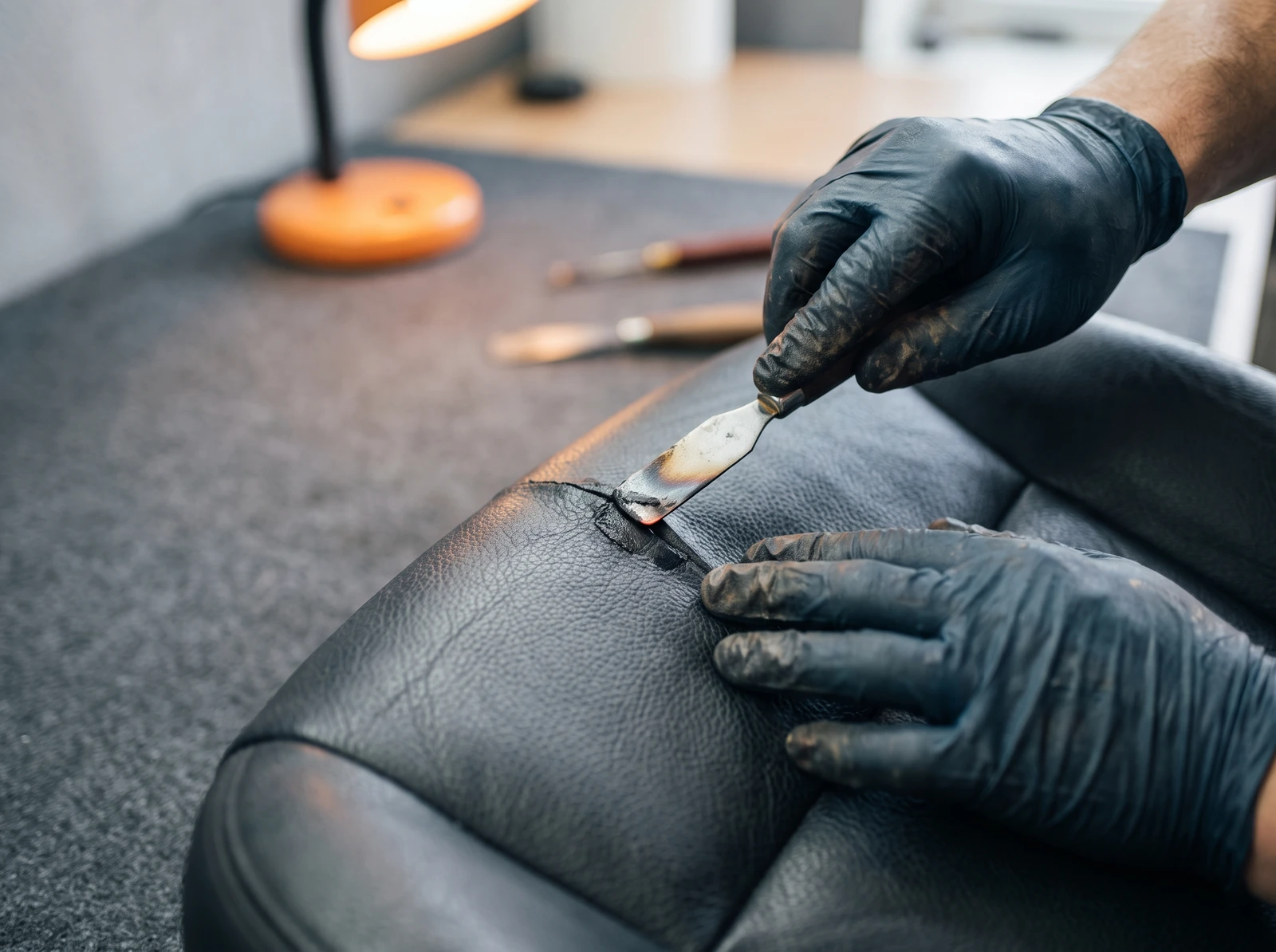
Leather seats fail in three main ways. Surface cracks appear where the finish has dried out and is flexed every time someone sits down. Tears start at a single sharp point, such as a key in a back pocket or a seatbelt buckle, and then run. Split seams open where the stitching gives way, usually on an edge that carries weight every time you get in and out.
Each needs a slightly different fix, but every leather repair starts the same way: we clean and prepare the hide so nothing on the surface stops the repair from bonding. Cracks and tears are then filled and bonded with flexible, leather-grade compounds. That flexibility matters. A seat moves under you on every journey, and a rigid filler, the kind found in many off-the-shelf kits, tends to crack out again once the seat has flexed enough times.
Where a seam has split, we re-stitch it. If the leather beside the seam is still sound, the new stitching follows the original line and the repair is very hard to find. If the edge of the hide has torn away with the thread, it has to be filled and bonded before it can hold a stitch, and we will show you why when we look at the seat. Finally, the repaired area is recoloured and sealed so it matches the grain and sheen of the rest of the seat.
Worn driver’s bolsters and side supports
The outer bolster on the driver’s seat, the raised side support you slide across every time you get in or out, takes more wear than any other part of the interior. On leather it shows first as a shiny patch where the colour has worn away, then as fine cracking, and eventually as a hole. On cloth seats the weave thins, pills and starts to fray.
Bolster wear usually has two layers to it. The cover is worn, and the foam underneath has often compressed or broken down, leaving the side support soft and out of shape. Repairing only the surface of a collapsed bolster gives you a seat that looks better but still sags, and the new finish wears faster because it is flexing over an unsupported edge. Where the foam has gone, we replace the padding beneath the cover so the bolster holds its shape again, then repair and colour the surface.
This is also where catching damage early makes the biggest difference. A worn, faded patch on a bolster is a recolouring job; once it has cracked through to a hole, it becomes a fill-and-bond repair with more work involved. One more thing worth checking: many modern cars have a side airbag built into the outer edge of the seat backrest, usually marked with a small airbag label on the seat. If yours has one, mention it when you get in touch so it is part of the assessment.
Fabric and cloth seat repair: seams, snags and sagging foam
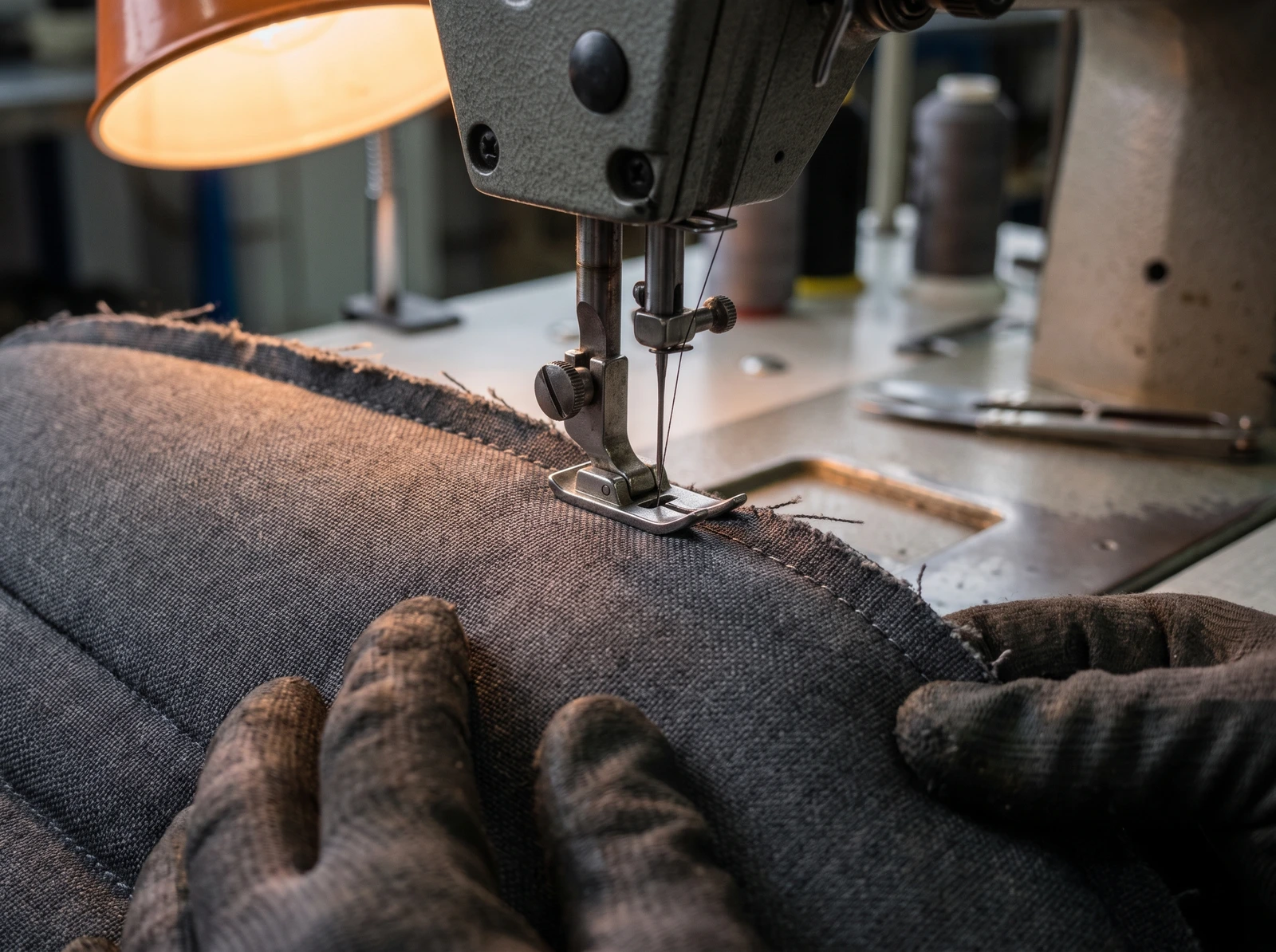
Cloth seats take the everyday knocks: snags from bags and tools, frayed seams, stubborn marks, and cushions that have slowly flattened until the seat no longer holds you. Fabric cannot be filled and recoloured the way leather can, so the repair works differently.
Split seams are re-stitched on high-frequency machines. Snags, pulls and small damaged sections are patched and re-woven so the repair blends into the surrounding weave rather than sitting on top of it as an obvious patch. Where a base cushion or backrest has lost its shape, we replace the foam padding underneath the cover, which restores both the look of the seat and the support you feel on a long drive.
Getting the blend right matters most on fabric, because patterned and textured cloths vary so much from one model to the next. We look at the material before we quote and tell you honestly how closely a repair will blend on your particular seat. The same assessment applies to vinyl and Alcantara seats, which we also work with.
Leather seat recolouring and sun-faded seats
The colour on a leather seat sits in a thin top coat, and that coat wears out before the hide beneath it does. Sunlight fades and dries it, friction on the bolsters wears it through, and dark clothing can leave dye on pale seats. The result is leather that looks grey, patchy or shiny even though it is still structurally sound.
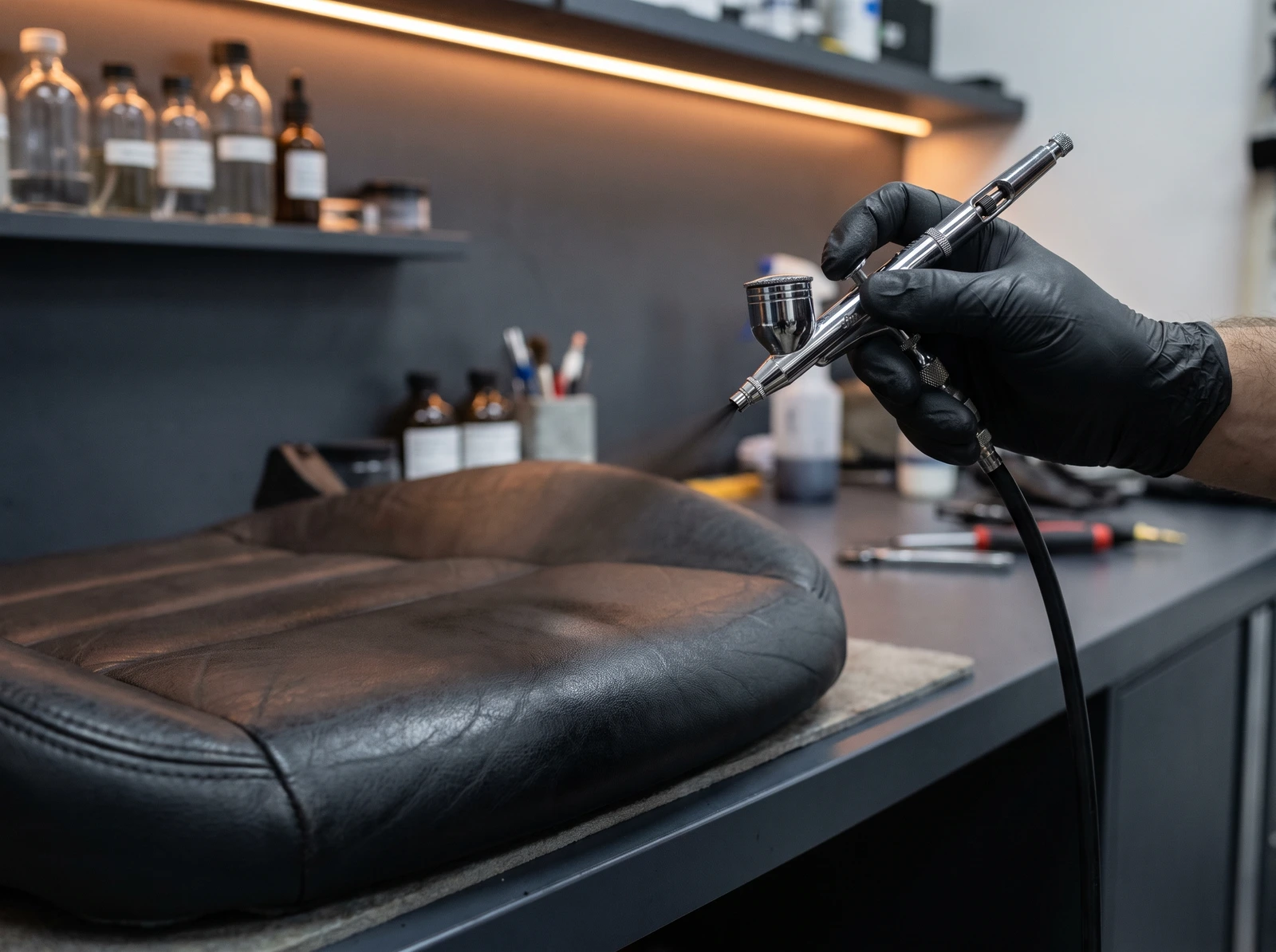
Recolouring puts that finish back. We strip back the tired surface, apply colour-matched pigment with airbrush systems, then seal it. We treat the whole panel rather than dabbing colour onto the worst mark, because an even finish across the full panel is what makes a recoloured seat look factory-fresh rather than touched up. If you would rather change the colour than restore it, that is possible too.
Recolouring is a finish, not a repair. It will not close a crack or mend a tear. If a seat has both worn colour and physical damage, the damage is repaired first and the recolour goes over the top, which is why the two are often quoted together.
Cigarette burns and small holes in seats
A burn leaves a hardened, melted edge around the hole. Filling over that edge does not last, so we cut back the damaged material first to leave a clean, sound border. The hole is then filled and re-textured so the surface pattern carries across the repair, and coloured to match the material around it. On fabric seats, small holes are patched and re-woven into the weave instead.
The same method deals with small punctures from keys, tools or a dog’s claws. Done well, the repair becomes something you would have to be shown to find.
Small holes grow. Every time weight moves across the seat, the edge is pulled, so a burn or puncture the size of a fingertip can lengthen into a tear. It is worth booking in while the damage is still small.
How we repair a car seat at our Greenwich workshop
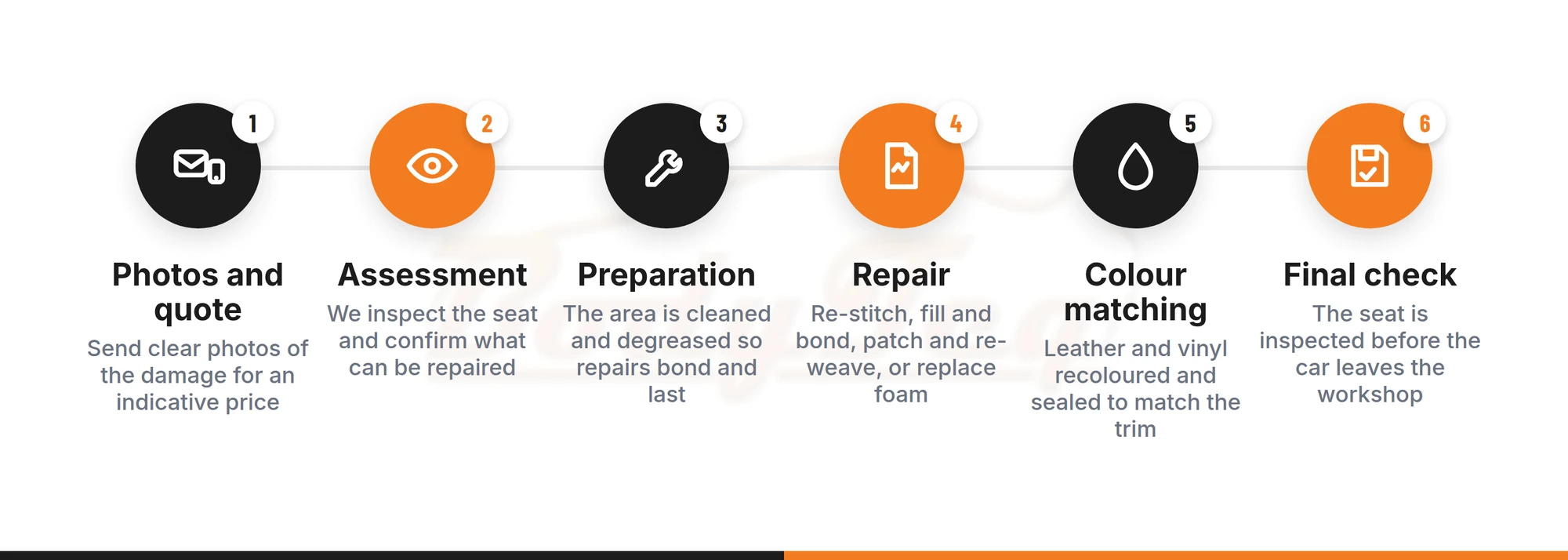
Seat repairs are carried out at our workshop in Greenwich, South-East London. You bring the car in and the work is done here, with the airbrush systems, high-frequency machines and trim tools the job needs. Every seat follows the same steps:
- Photos and quote. Send clear photos of the damage through our contact page, one close up and one showing the whole seat. That is usually enough for an indicative price.
- Assessment. When the car arrives, we inspect the seat, identify the material and confirm what can be repaired. If a repair would not last on your seat, we tell you before any work starts.
- Preparation. The area is cleaned and degreased so compounds, dyes and finishes bond properly and last.
- Repair. We re-stitch, fill and bond, patch and re-weave, or replace the foam padding, as the damage requires.
- Colour matching. Leather and vinyl are recoloured and sealed to blend with the surrounding trim.
- Final check. The seat is inspected before the car leaves the workshop.
Most seat repairs are completed within one to three days, depending on how much damage there is and how much colour matching is involved, and you get a realistic timescale with your quote. Every repair is backed by our six-month workmanship guarantee.
Because we are a bodyshop as well as an interior repairer, seat work can be booked in alongside anything else the car needs. If the seats were damaged in an accident, we can carry out the work and handle the repair through your insurance.
Drivers bring their cars to us from across South-East London: Blackheath, Charlton and Woolwich close by, with Bexley, Sidcup, Bromley and Orpington a little further out. If you have been looking for car seat repair near you in that part of London, our service areas page lists everywhere we cover.
Car seat repair cost: indicative prices
The price of a seat repair depends on the material, the size and type of damage, and whether the foam underneath needs replacing. These indicative UK ranges show where typical seat repairs start:
| Car seat repair | Indicative UK price from |
|---|---|
| Leather seat tear or crack repair | from £80–£250 |
| Fabric seat or bolster repair | from £60–£200 |
| Leather recolouring (per seat) | from £120–£300 |
Where a job lands within a range comes down to how large the damage is, whether the foam needs replacing and how much colour matching is involved. Smaller jobs, such as a single burn, are priced once we have seen them. For a firm figure, send photos or bring the car in for a free quote.
For repair prices across the rest of the car, inside and out, see our car body repair cost guide.
Car seat repair FAQs
Is it worth repairing a damaged car seat?
In most cases, yes. A repair keeps the original leather or cloth in place and is almost always more cost-effective than living with the damage, which tends to spread. A tidy, cared-for interior also counts for a great deal when you come to sell or part-exchange the car.
Will the repair show on a leather seat?
On most leather seats a well-matched repair is very hard to spot, because we fill, re-texture, recolour and seal the area to match the grain and sheen of the original hide. How close the match is depends on the condition of the leather around the damage, so we tell you what to expect when we assess the seat.
How long does car seat repair take?
Most seat repairs are completed within one to three days, depending on how much damage there is and how much colour matching or foam work is involved. You get a realistic timescale with your quote.
Do I need to bring my car to you?
Yes. All seat repairs are carried out at our workshop in Greenwich, South-East London; we do not repair seats away from the workshop. You can send photos first for an indicative price, then book the car in.
Can you fix a seat that has gone flat or saggy?
Yes. A seat that has lost its shape usually has compressed or broken-down foam under the cover. We replace the foam padding beneath the cover so the cushion or bolster holds its shape and supports you properly again.
Are car seat repairs guaranteed?
Every upholstery repair, including seat repairs, is backed by our six-month workmanship guarantee, and every seat is inspected before the car leaves the workshop.
Can seat damage from an accident go through my insurance?
Yes. If your seats were damaged in an accident, we can carry out the repair and handle it through your insurance. For wear, burns and fading, we quote you directly.
A torn seam or a worn bolster is a small repair while it is small. Send a few photos or bring the car to Greenwich, and you will know what the seat needs and what it costs before any work starts.