Search for what it costs to refurbish a set of alloys and you will get a different answer from almost every page you open. That is not the trade being evasive. It is because “alloy wheel refurbishment” covers several genuinely different jobs, and the finish on your wheels, their size and the damage they have taken all move the price. A light kerb scuff on a painted wheel and a corroded diamond-cut face are not the same repair, and they should not carry the same cost.
This guide explains what actually drives the cost of refurbishing alloy wheels in London, so you can read any quote and understand what you are paying for. Below, we set out indicative UK market price bands alongside the honest cost drivers behind them. Once we have seen photos of your wheels, or the wheels themselves at our Greenwich workshop, we give you a clear, fixed quote with nothing hidden behind it. Alloy work is one part of our wider alloy wheel refurbishment service.
For a fixed quote on your alloys, get in touch or call us on 0207 998 4712.
How Much Does Alloy Wheel Refurbishment Cost in London?
There is no single price for alloy refurbishment because there is no single job. As a UK market guide, a standard painted or powder-coated refurbishment typically costs from around £80 per wheel, while diamond-cut refinishing typically sits around £120–£150 per wheel on common 17- to 19-inch sizes. What you pay comes down to a handful of clear factors: the finish, the size of the wheel, how many wheels you are having done, and how badly they are damaged. The table below sets out what drives the cost for each type of refurbishment. The accurate figure for your car comes from a quote once we have seen the wheels.
| Type of refurbishment | What it involves | What drives the cost |
|---|---|---|
| Standard painted refurbishment | Strip, repair, prime, colour-match and lacquer the whole wheel | Wheel size, number of wheels, depth of kerb and scuff damage |
| Diamond-cut refinishing | Re-cut the machined face on a CNC lathe, then re-lacquer and cure | Wheel size and spoke design, corrosion under the lacquer, how many times already re-cut |
| Powder-coating | Blast back to bare metal, then apply and oven-cure a hard-wearing powder finish | Wheel size, the colour and finish chosen, whether extra prep is needed |
| Kerb, scuff or crack repair | Put the specific damage right before any refinishing | Extent of the damage and whether the rim is buckled or cracked |
Alloy Wheel Refurbishment Cost by Finish: Standard, Diamond-Cut and Powder-Coat
The finish is the single biggest thing that moves the price, because each one is a different amount of work. Knowing which finish your wheels have — and which you want them refinished in — is the first step to understanding a quote.
| Finish | How it is done | Where it sits on cost |
|---|---|---|
| Standard painted | The whole wheel is refinished in a colour-matched paint and sealed under lacquer | The most straightforward finish, and usually the most economical way to bring tired or scuffed wheels back |
| Diamond-cut | The bright machined face is re-cut on a precision lathe and re-lacquered | Costs more than a painted refinish because of the extra lathe work and the precision it demands |
| Powder-coated | A dry powder finish is applied over bare metal and cured hard in an oven | A durable, hard-wearing option; cost depends on the colour and preparation, and it protects well against future kerbing |
To put numbers against those finishes, the bands below show what refurbishment can cost per wheel across the wider UK market. They are indicative figures drawn from published trade pricing, not a Bodyteq price list, and your own figure is confirmed in a fixed quote once we have seen the wheels.
| Job | Typical UK market cost | What the band covers |
|---|---|---|
| Standard painted refurbishment | Typically £80–£110 per wheel | Full strip and refinish on common 17- to 19-inch wheels |
| Powder-coated refurbishment | Typically £80–£110 per wheel | Common wheel sizes; usually priced in line with a painted refinish |
| Diamond-cut refinishing | Typically £120–£150 per wheel | Lathe re-cut and re-lacquer on common 17- to 19-inch wheels |
| Localised kerb or scuff repair | Around £50–£90 per wheel | Light cosmetic rim damage only, not a full refinish |
| Crack repair (welding) | Around £70–£85 per crack | Usually charged on top of any refinishing the wheel then needs |
| Buckled wheel straightening | From around £70 per wheel | Usually charged on top of any refinishing the wheel then needs |
| Larger wheels (21-inch and above) | From around £90–£125 per wheel painted; from around £130 per wheel diamond-cut | Extra preparation time and material on a bigger diameter |
What Affects the Cost of Refurbishing Your Alloys?
Beyond the finish, four practical factors shape what a refurbishment costs. Wheel size matters because a larger diameter wheel takes more time to prepare and refinish than a small one. Damage extent matters just as much: a light scuff on the rim is a quick repair, whereas deep gouges, corrosion or a chunk taken out of the rim need building back before any refinishing can start.
The number of wheels is the next factor — a single kerbed wheel is priced differently from a full set of four done together. And the condition of the underlying wheel counts too: a cracked or buckled rim has to be made safe before it is worth refinishing, and not every wheel can be saved. When we quote, we look at all of this on the actual wheels rather than a generic price list, which is why the figure you get is one you can rely on.
Diamond-Cut Alloy Repair Cost Explained
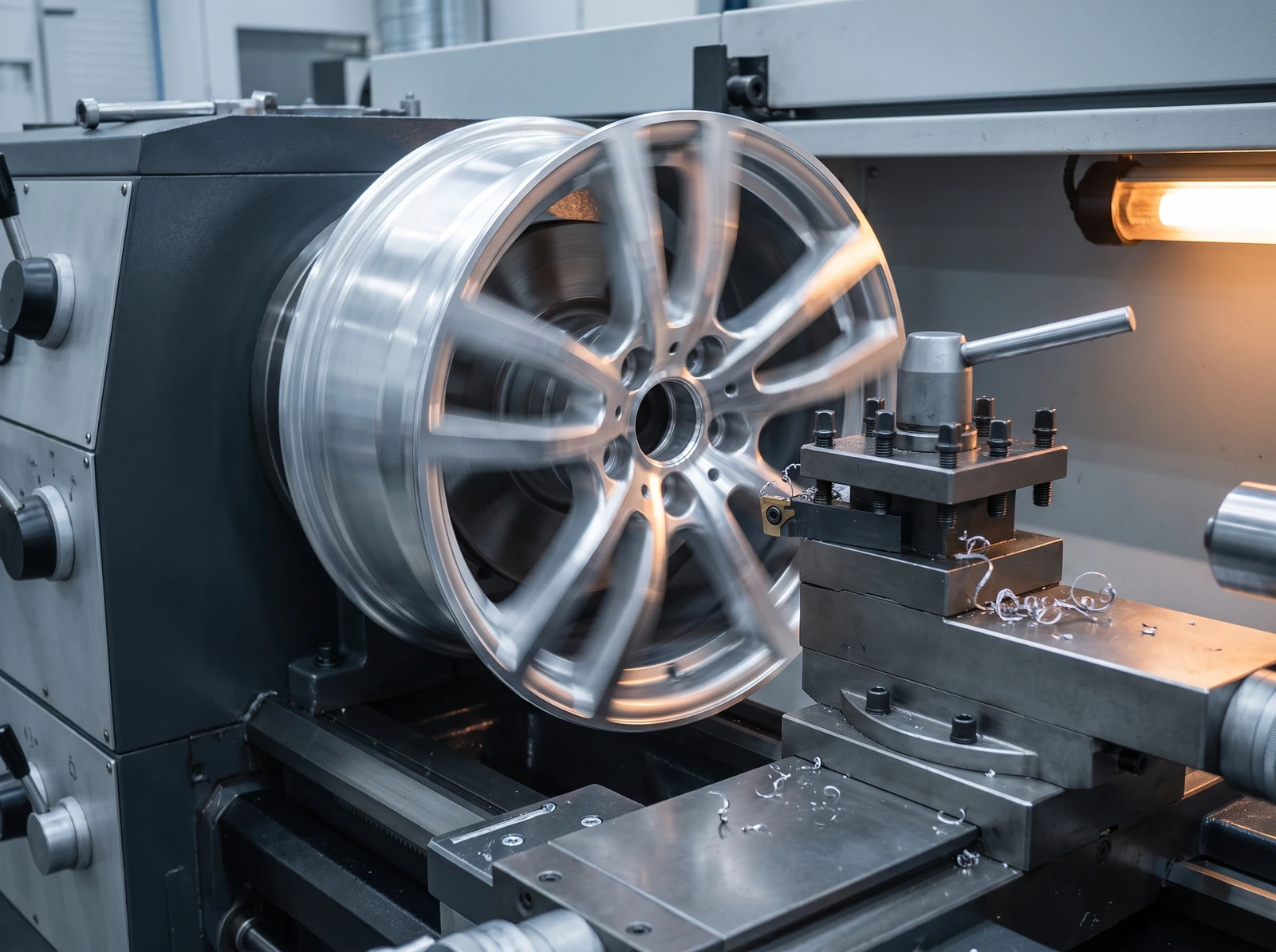
Diamond-cut wheels cost more to refurbish than painted ones, and it helps to know why. The bright, turned face is not painted at all — it is machined bare on a lathe and sealed under a thin layer of lacquer. Restoring it properly means re-cutting that face on a CNC lathe to bring back the fine concentric finish, then re-lacquering and curing it. There is a limit, too: each re-cut removes a little metal, so a face can only be diamond-cut a finite number of times before it is better refinished another way. All of that extra work is what sits behind the price, and it is why we assess each wheel first. As a market guide, diamond-cut refinishing typically costs around £120–£150 per wheel on 17- to 19-inch wheels, with larger diameters sitting higher. You can read more about the process on our diamond-cut alloy repair page.
Powder-Coating Alloy Wheels: What to Expect to Pay
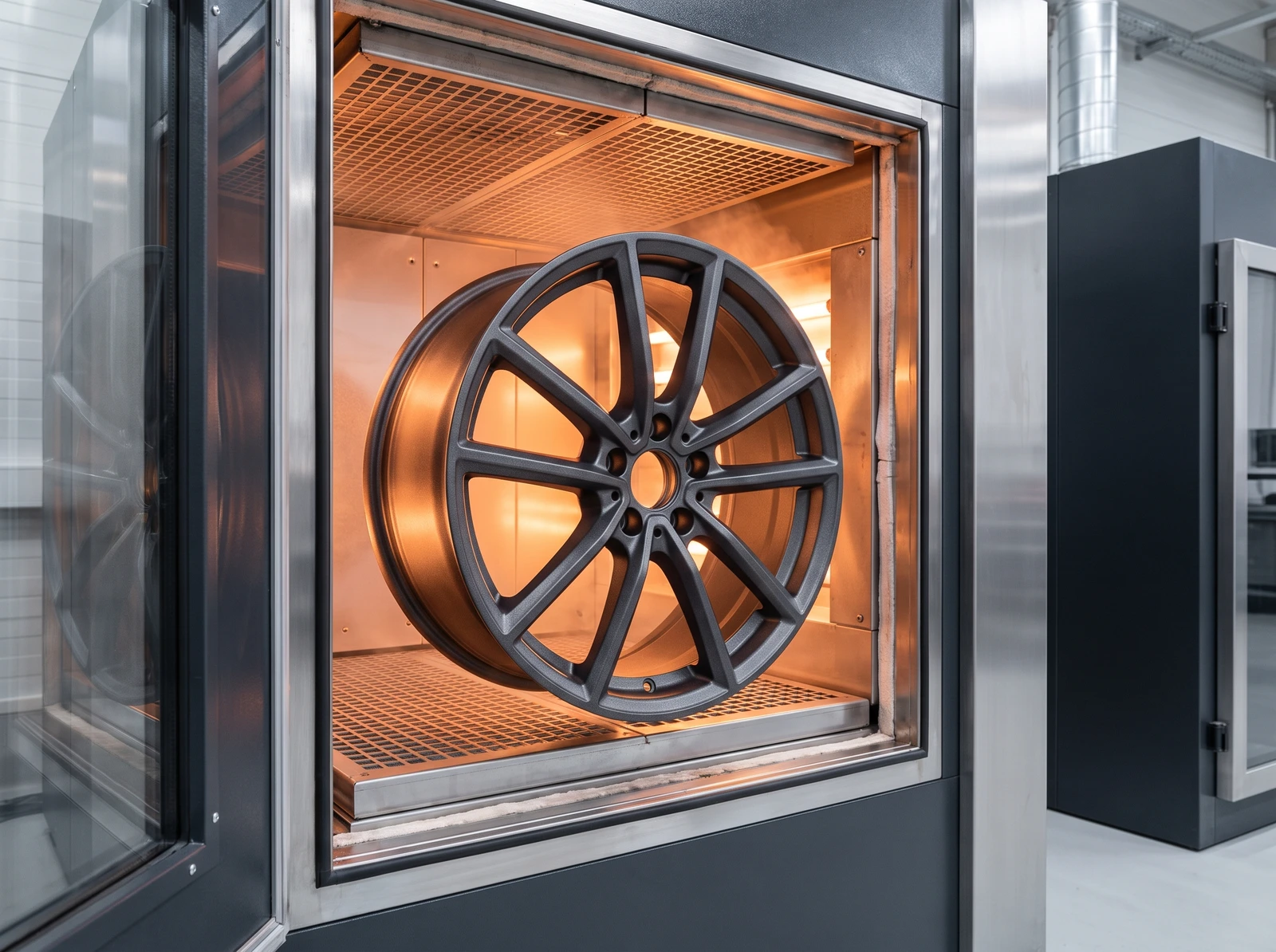
Powder-coating is a tough, long-lasting finish, and its cost is driven by the preparation and the finish you choose. The wheel is stripped back to bare metal, the powder is applied dry, and it is then cured hard in an oven so it bonds into a resilient surface that stands up well to stone chips, road salt and the odd kerb. Because it is so durable, many owners choose it when they want a colour change — gloss black and anthracite are popular — or simply want a finish that will not need attention again for a long time. The colour, the depth of preparation and the wheel size all feed into the quote. As a market guide, a powder-coated refurbishment on common wheel sizes typically costs around £80–£110 per wheel. See our powder-coating alloy wheels page for more.
Kerbed, Scuffed and Cracked Alloy Repair Costs
Kerb and scuff damage is the most common reason wheels come to us, and it is usually the most affordable to put right — a light rim scuff is a contained repair rather than a full refinish. The cost climbs with the severity of the damage: deep kerbing that has torn into the rim, or corrosion that has spread across the face, means more preparation before the finish goes back on. Cracks and buckles are a different matter. A cracked or badly buckled wheel is a safety issue first, so it has to be assessed and made safe before any cosmetic refurbishment is worth doing — and if a wheel cannot be repaired safely, we will tell you plainly rather than refinish something that should be replaced. As a market guide, a localised scuff repair typically costs around £50–£90 per wheel, while welding a crack or straightening a buckle each tends to start from around £70, usually on top of any refinishing the wheel then needs.
Why Choose Bodyteq for Alloy Refurbishment in Greenwich

The quality of an alloy refurbishment stands or falls on the equipment and the environment behind it, and we keep the whole process in-house at our Greenwich workshop. We refinish diamond-cut wheels on our own CNC lathe and cure powder-coated finishes in our own oven, so nothing is farmed out and nothing is rushed on a driveway — the controlled, dust-free conditions these finishes need are exactly why we work from a fixed workshop rather than a mobile van. The wheels are refinished by technicians whose combined experience across paint, panel and refinishing runs to more than 70 years, and every job is quality-checked and backed by our satisfaction guarantee. As a family-run specialist, we would always rather advise you honestly on the right finish than sell you the dearest one.
Get a Fixed Alloy Refurbishment Quote
The most accurate way to price your job is simple: send us clear photos of the wheels or bring them to our Greenwich workshop, tell us the size and how many you want done, and we will come back with a clear, fixed quote and no surprises added later. If the same knock that caught your wheel also marked a bumper or panel, we can put both right in one visit — our car body repair cost guide explains how that side of the work is priced. Drivers come to us from across Greenwich, Blackheath, Charlton, Woolwich and the wider capital, and the work is carried out in the workshop where the lathe and the oven are.
For a fixed quote on refurbishing your alloys, get in touch or call us on 0207 998 4712 and bring your wheels to our Greenwich workshop.
Alloy Wheel Refurbishment Cost FAQs
How much does it cost to refurbish alloy wheels?
As a UK market guide, a standard painted or powder-coated refurbishment typically costs from around £80 per wheel, diamond-cut refinishing around £120–£150 per wheel, and a set of four standard wheels commonly from around £300. Where your wheels sit in those bands depends on the finish (standard painted, diamond-cut or powder-coated), the size of the wheel, how many wheels you are having done, and the extent of any kerb, scuff or crack damage. Because those factors vary so much from car to car, we do not work from a fixed price list. Instead, we give you a clear, fixed quote once we have seen photos of your wheels or the wheels themselves — with no hidden costs added afterwards.
Can a diamond-cut alloy be repaired?
In most cases, yes. The bright machined face is re-cut on a CNC lathe to restore its finish, then re-lacquered and cured. We assess each wheel first, because a diamond-cut face can only be safely re-cut a limited number of times before it is better refinished another way, and severe corrosion or cracks can rule it out. Where a wheel can no longer be re-cut, we can refinish it in a painted or powder-coated finish so it is still saved.
Are diamond-cut alloys worth refurbishing?
For most owners, yes. Refurbishing restores the factory look, seals the finish back up so corrosion cannot keep spreading, and is far more cost-effective than buying replacement wheels, which can be expensive on many prestige cars. The one thing to weigh is how many times a wheel has already been re-cut. If a wheel is near that limit or too badly damaged, we will advise you honestly on whether a different finish or a replacement is the better choice.
How long does alloy wheel refurbishment take?
It depends on the finish and how many wheels you are having done. Diamond-cut and powder-coated finishes take longer than a standard painted refurbishment, because the lathe work and the oven-curing cannot be rushed without the finish failing early. We confirm a realistic timescale for your wheels when we give you the quote, so you can plan around it.