A SMART repair on a scuffed bumper corner, a scratched door or a small parking dent typically costs from around £80 to £300 in the UK, because only the damaged patch is repaired rather than the whole panel. Where your repair lands in that range comes down to three things: how big the area is, how deep the damage goes, and the paint on your car.
The figures on this page are UK market guidance, drawn from published price lists and repair guides. They are not a Bodyteq price list. We quote every repair individually once we have seen the damage, from clear photos or with the car in front of us at our Greenwich workshop. If you would like to understand the method before the money, our SMART repairs page explains how a small-area repair is carried out.
For a figure on your own car, send us a few photos for a free SMART repair quote.
How Much Does a SMART Repair Cost? Price Table by Damage Type
SMART stands for Small to Medium Area Repair Technology, and it is priced by the area being repaired rather than by the panel. The table groups the most common jobs by type of damage, the work each one usually needs and the typical UK cost. Some published price lists quote their figures plus VAT and others include it, so check which you are looking at before you compare two quotes.
| Type of damage | What the repair usually involves | Typical UK cost |
|---|---|---|
| Light scuff or scratch in the lacquer | Machine polishing, or a small touch-in | Typically £60–£150; around £90 is common |
| Stone chips on one panel | Each chip cleaned, filled with matched paint and lacquered | From around £40–£50 per panel |
| Scratch or scuff into the colour coat, contained area | Sand, repaint and blend just the damaged area | Typically £150–£300 |
| Light scuff on a plastic bumper | Scuffed area prepared and refinished | From around £100 |
| Scuffed bumper corner needing paint | Corner prepared, painted and blended | Commonly £150–£200 |
| Small dent, paint intact | Paintless dent repair from behind the panel | Typically from around £75–£90 |
| Larger or awkwardly placed dent, paint intact | Paintless dent repair with more access work | Commonly £150–£200 per panel |
| Larger SMART area, such as half a door or wing | Wider preparation and a longer blend | Commonly £200–£300 |
| Damage too large for SMART | Full panel refinish | Typically £200–£500 per panel |
Several of the guides these ranges come from note that repairs in London and other large cities are priced higher than in smaller towns, so a London quote towards the upper half of a band is not unusual on its own. What matters more is what the quote actually covers: a polish, a SMART paint repair or a full panel.
Scuffs and Small Scratches
Scuffs and light scratches are the everyday SMART job: a bumper corner caught on a pillar in a multi-storey, a bag dragged along a door, a hedge down a narrow lane. If the mark sits only in the clear lacquer, machine polishing may remove it and the cost stays at the bottom of the range. More than one UK guide puts a typical light scratch at around £90 to put right professionally.
Once the colour coat underneath has been cut, polishing cannot level it. The area has to be sanded back, repainted in your car’s colour and blended into the paint around it, and a contained scratch at that depth typically costs £150–£300. A fingernail drawn lightly across the mark is a reasonable first check: if it glides over, polish may be enough; if it catches, expect paint.
Scratches have enough variables of their own, from keyed doors to marks through to bare metal, that they have a dedicated page. Our car scratch repair cost guide breaks them down by depth and by the number of panels involved.
Stone Chips and Small Paint Blemishes
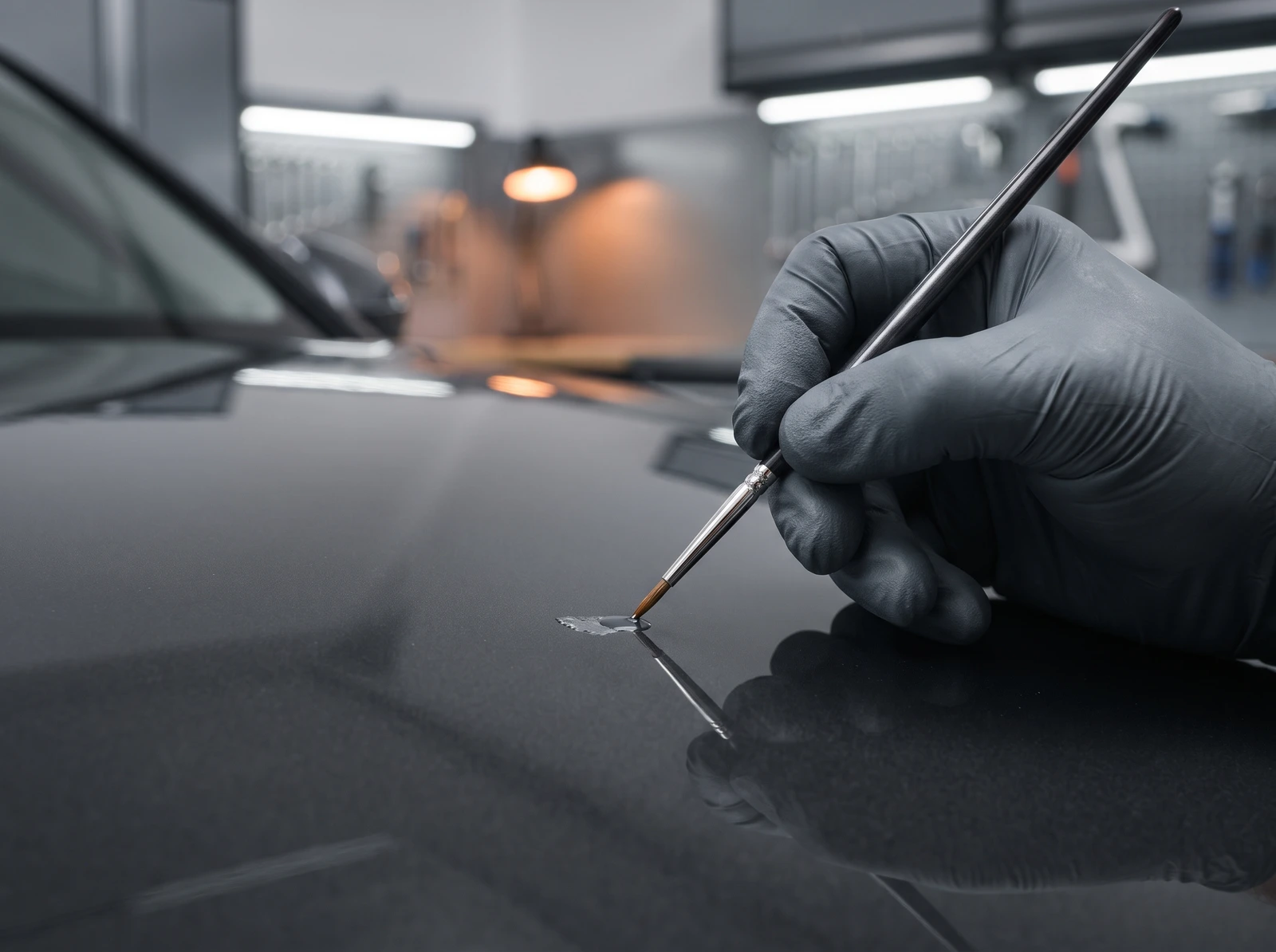
Stone chips are small, but they are rarely only cosmetic. A chip that has gone through to bare metal on a bonnet or the leading edge of a wing is an opening for corrosion, and wet UK roads give rust every chance to take hold. A professional touch-in on a panel with a few chips can cost from around £40–£50 per panel across the UK, which makes it one of the least expensive repairs on this page.
A touch-in works by cleaning out each chip, building up colour-matched paint in thin layers until it sits level with the surrounding finish, then sealing it with lacquer. On a handful of isolated chips, that gives a neat and protected result. On a bonnet or front bumper peppered by motorway grit, filling dozens of individual marks stops making sense, and refinishing the panel usually gives a better result for the money.
The same small-area approach suits other contained paint blemishes, such as a nick from a neighbouring door edge. Our stone chip repair page explains the repair itself in more detail.
Small Dents and Minor Bumper Damage
A small dent where the paint has not cracked is often the most economical bodywork repair there is, because paintless dent repair works the metal back into shape from behind the panel without any paint at all. Across the UK, small dings repaired this way typically cost from around £75–£90, while larger or harder-to-reach dents on a single panel commonly cost £150–£200.
If the paint has cracked, or the dent sits on a sharp body line where the metal has creased, it usually needs filling and painting instead. That adds a paint repair on top of the dent work, so it costs more than a paintless repair on the same panel, and we price it once we have seen it.
Bumper Scuffs, Corners and Cracks
Bumpers take more SMART work than any other part of the car, mostly at the corners. A light scuff on a plastic bumper typically costs from around £100 to repair, and a scuffed corner that needs painting and blending commonly costs £150–£200. Parking sensors or cameras in the damaged area add preparation time, which can push the price up.
A cracked bumper is a different job. The plastic has to be repaired from behind before any paint goes on, and that typically costs £250–£500. Our car bumper repair cost guide covers scuffs, cracks and replacement in more depth.
What Moves the Price of a SMART Repair
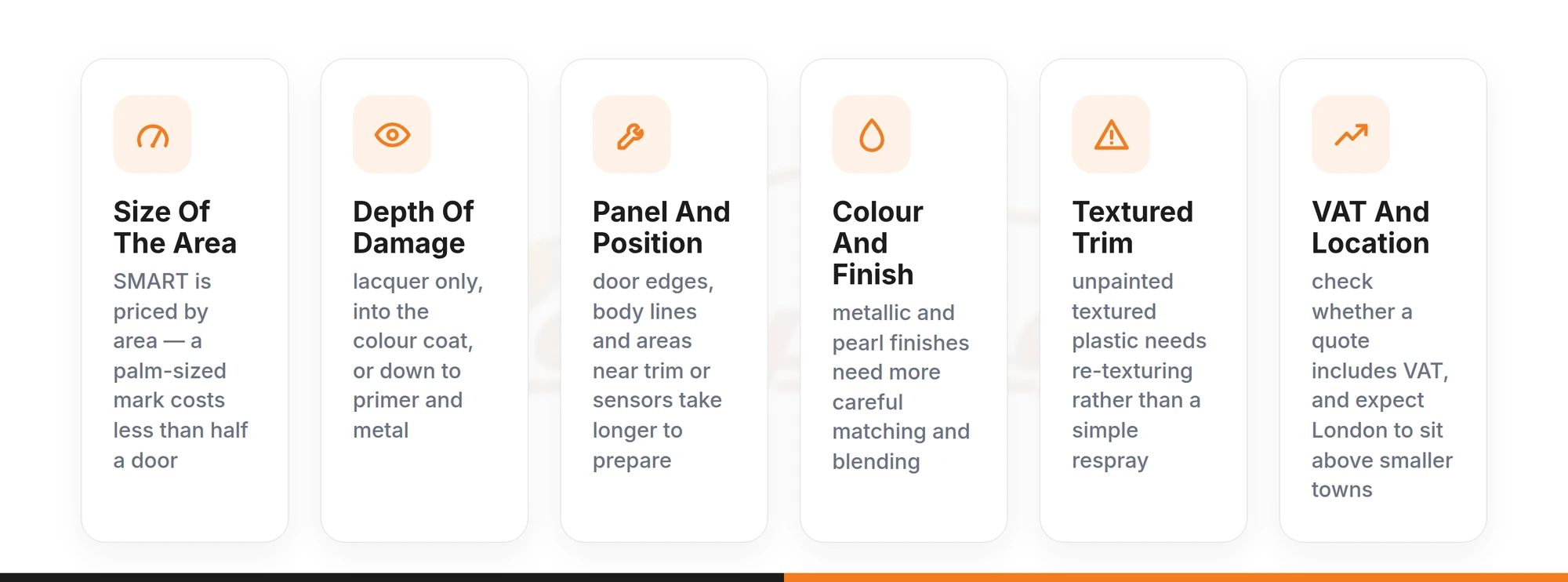
Two repairs that look alike in a photo can still be priced differently. These are the factors behind most of the gap:
- Size of the repair area. SMART is priced by area, so a mark the size of your palm and one running half the length of a door are different jobs.
- Depth. Lacquer only, into the colour coat, or down to primer and metal: each step adds work.
- Panel and position. Door edges, body lines and areas close to handles, trim or sensors take longer to prepare. Large flat panels such as a bonnet or roof need a wider blend, because you look straight down onto them.
- Colour and finish. Solid colours are the most forgiving. Metallic and pearl finishes need more careful matching and blending, and matt finishes can cost considerably more.
- Textured plastic trim. Unpainted textured plastic cannot be sanded and painted like a smooth panel, so it needs re-texturing or, sometimes, a replacement part.
- Number of areas. Some price lists charge less per area when several repairs are done together, so it is worth having everything quoted at once.
- VAT and location. Check whether a quote includes VAT, and expect London prices to sit above those in smaller towns.
Why the Workshop Matters as Much as the Price
Many SMART repairs are carried out outdoors, on a driveway or in a car park. Several of the published guides point out themselves that cold, damp air and airborne dust can affect how paint and lacquer cure, and that an invisible blend on a bonnet or roof is very hard to achieve outside a spray booth. For a small mark that may not matter; on metallic paint or a wide blend, it often does.
Every SMART repair we carry out happens inside our Greenwich workshop. We read your colour with a spectrophotometer, mix it in genuine Standox paint, apply it in our spray booth and cure the HS lacquer in a low-bake oven, so the repair has hardened fully before the car goes home. The result is a repair that blends into the paint around it, whatever the weather is doing outside.
When SMART Repair Is Not the Right Fix, and What It Costs Instead
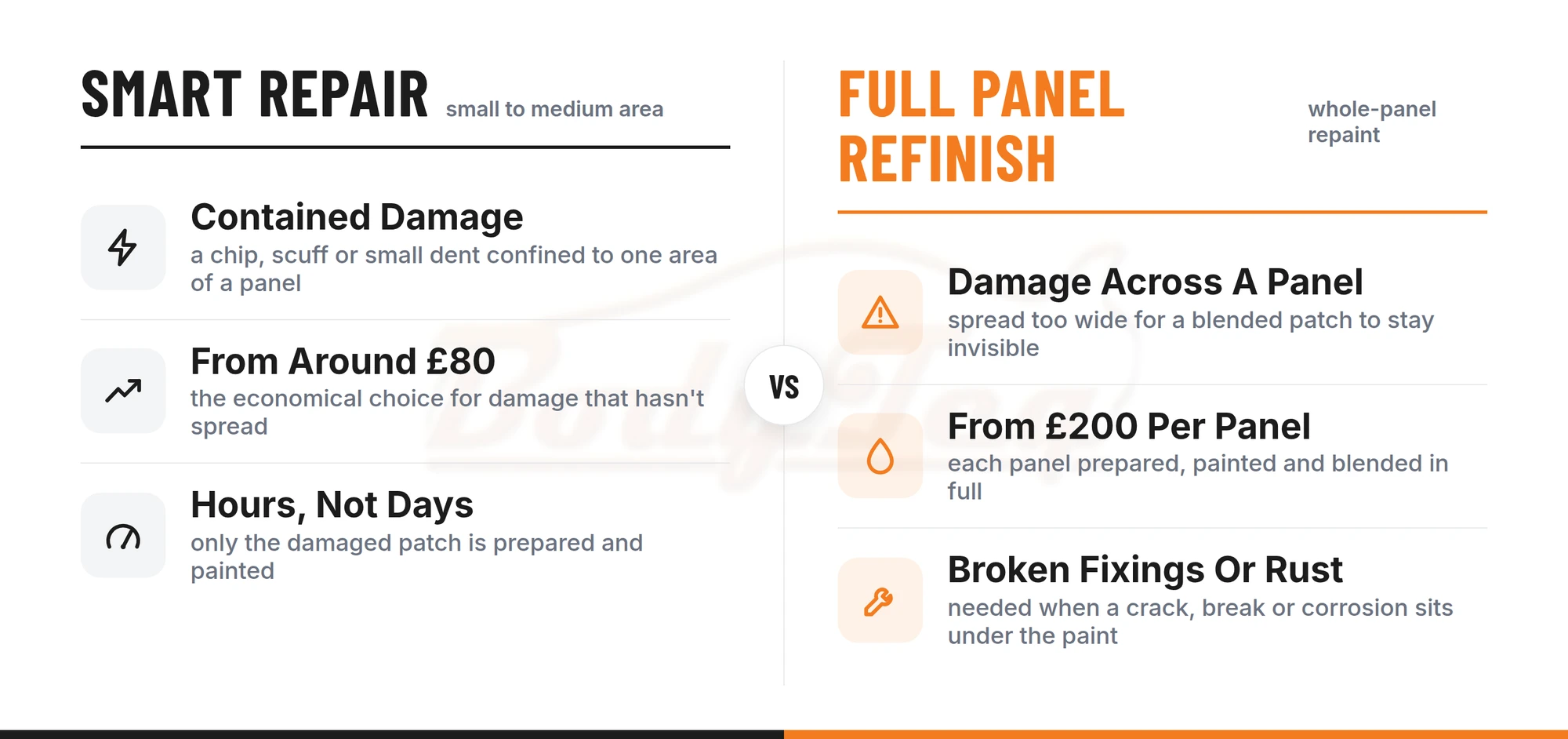
SMART is designed for contained cosmetic damage. In a few clear situations it stops being the economical choice, or the right one:
- Damage across most of a panel. Once the repair spreads over much of a door or wing, a blended patch becomes harder to hide than a fresh finish. A full panel refinish typically costs £200–£500 per panel.
- A keyed side. When several panels need paint, each is prepared, painted and blended into the next, and the total commonly runs to £500 or more.
- Cracked bumpers and broken fixings. Paint cannot mend a broken clip or bracket. The bumper has to come off to be repaired and refitted properly, and a cracked bumper typically costs £250–£500.
- Deep or creased dents. Where the metal has stretched, paintless repair cannot return it to shape, and the panel needs beating out, filling and painting.
- Rust that has come through. Corrosion has to be cut back and treated before any paint goes on, and that is priced on inspection.
None of this means paying for more than your car needs. We are specialists in SMART repair, and part of every quote is telling you plainly whether a small-area repair will give an invisible result or whether the panel needs a full refinish. For damage beyond SMART, our London car body repair cost guide explains how larger jobs are priced. If the damage came from an accident, we handle repairs through your insurance and work with all insurers.
Getting a SMART Repair Quote in Greenwich
The bands on this page are there to help you recognise a sensible quote. The repair your car actually needs is set by the size, depth and position of the damage, and that only becomes clear once someone has looked at it in good light.
Send us clear photos from a couple of angles, including one taken a step back so we can see the whole panel. The quote you receive sets out what each area needs, with no hidden costs added later. When you are ready, bring the car to our family-run workshop in Greenwich, which drivers use from across South, South-East and East London.
Request your free SMART repair quote and we will tell you exactly what the damage needs.
SMART Repair Cost FAQs
How much does a SMART repair cost in London?
Across the UK, most SMART repairs typically cost from around £80 to £300, and London prices tend to sit towards the upper half of that range. A few stone chips or a light scuff will be at the lower end; a painted bumper corner or a larger area on a door nearer the top. We quote every repair after seeing photos or the car.
Do SMART repair prices include VAT?
Not always. Some published SMART price lists quote figures plus VAT while others include it. Before comparing two quotes, check whether each includes VAT and exactly what work it covers, whether that is a polish, a SMART paint repair or a full panel, so you are comparing like with like.
How long does a SMART repair take?
Most SMART repairs are measured in hours rather than days, because only a small area is prepared and painted. Drying and curing the lacquer takes up a good part of that time, which is why we cure repairs in a low-bake oven rather than leaving them to air-dry. For many SMART jobs you can leave the car with us for the day.
Is it worth claiming on insurance for a SMART repair?
Usually not for a single scuff, chip or small dent: the repair often costs less than a typical policy excess, and a claim can affect your no-claims bonus. For more extensive damage, such as an accident or a keyed side, a claim can make more sense, so check your policy terms. If you do claim, we handle repairs through your insurance and work with all insurers.
Can SMART repair fix stone chips or scratches on a bonnet or roof?
Isolated stone chips on a bonnet can be touched in, and small marks on a bonnet or roof can sometimes be repaired locally. Because you look straight down onto these large flat panels, a blended patch is much easier to spot, so larger scratches or heavy chipping there usually need the whole panel refinished. We will tell you which applies when we quote.